Earlier, we learned that the path from Gyöngyösi College first led to the Kendall Jackson Winery in California, then after returning home, following an unsuccessful job search and before another trip to California, the opportunity arose at Tibor Gál’s winery, from where his career continued with a decision made in ten minutes at the Tuscan AIA Vecchia winery from 2001 to 2005.
He then revealed that at the Kúria his colleagues call him Captain, spoke about the professional challenges he is currently engaged with, the importance of terroir, and that his daughters can blend wine based on scent, but that doesn’t necessarily mean there will be a successor in the family.
– Early riser or dreamer?
– Since I have children, early riser.
– Breaststroke or freestyle?
– Well.
– Is there anything that really gets under your skin?
– It’s quite hard, but then it’s a big problem.
– Favorite movie?
– Pirates of the Caribbean, because my kids watch it, I’ve seen all five parts about fifteen times.
– Are you a good dancer?
– No.
– Is there an area in Etyek you would recommend for a trip?
– We often hike in Budaörs, but I really like the Vértes, I think it’s beautiful!
– Food you won’t eat?
– I’m not picky, but I don’t like rice in certain forms.
– Do you believe in wine and food pairing?
– If the wine is good, I think it almost doesn’t matter. Italians drank red wine with everything, even though they ate a lot of fish; Pellegrini always brought his own wine. It’s an interesting game, that’s true, and it satisfies today’s demands, but at home I don’t drink a different wine with every dish. Obviously, it depends on the environment, company, and place. We learned pairing from Gabi Mészáros and Gábor Rohály, though we only tasted with cheeses, but they encouraged everyone to dare to express their opinion because it’s good if everyone has their own ideas about things. Unfortunately, people often lack the confidence to say what they like.

– What trends can we observe today in the wine market, and what is your opinion about them?
– Everyone makes good wines because the technology is available. Consumers still don’t know much; wine is surrounded by mystery, and that adds to it. They always look for novelties, but winemaking is exactly about the opposite, about consistency. If you look at the great legendary producers, for example from France, their centuries-old chateaux don’t release new vintages every year; they do the same thing, and people line up for it, pre-ordering the wines. Here, it’s also related to land ownership, and the vine might not like that; there hasn’t been a 50-60 year period with the same owner of a plot.
– How much do technical advances and their rapid development occupy your mind? Is this noticeable in the wine profession?
– They definitely affect the profession. Winemaking has developed more in the last 10-15 years than since wine has been made. The things that have reached us winemakers help a lot; they are not bad. I can’t say if mechanization will replace people. It might, but then everything would be quite square and a sad world awaits us. There are many innovations, but I think winemaking is exactly an area that cannot be 100% mechanized.
– Do you have a winemaker role model, anyone you look up to?
– I look up to many people; it doesn’t have to be a great person. I can’t single out one. Tibor (Tibor Gál, ed.) was also a great figure, as was Mónika Debreczeni. The vine ties you there. Pellegrini also started from nothing after the war, buying peasants’ wines and selling them.
– Is there a question you would never answer?
– I was taught that questions starting with “if” don’t make sense to answer.
– What do you love about your work?
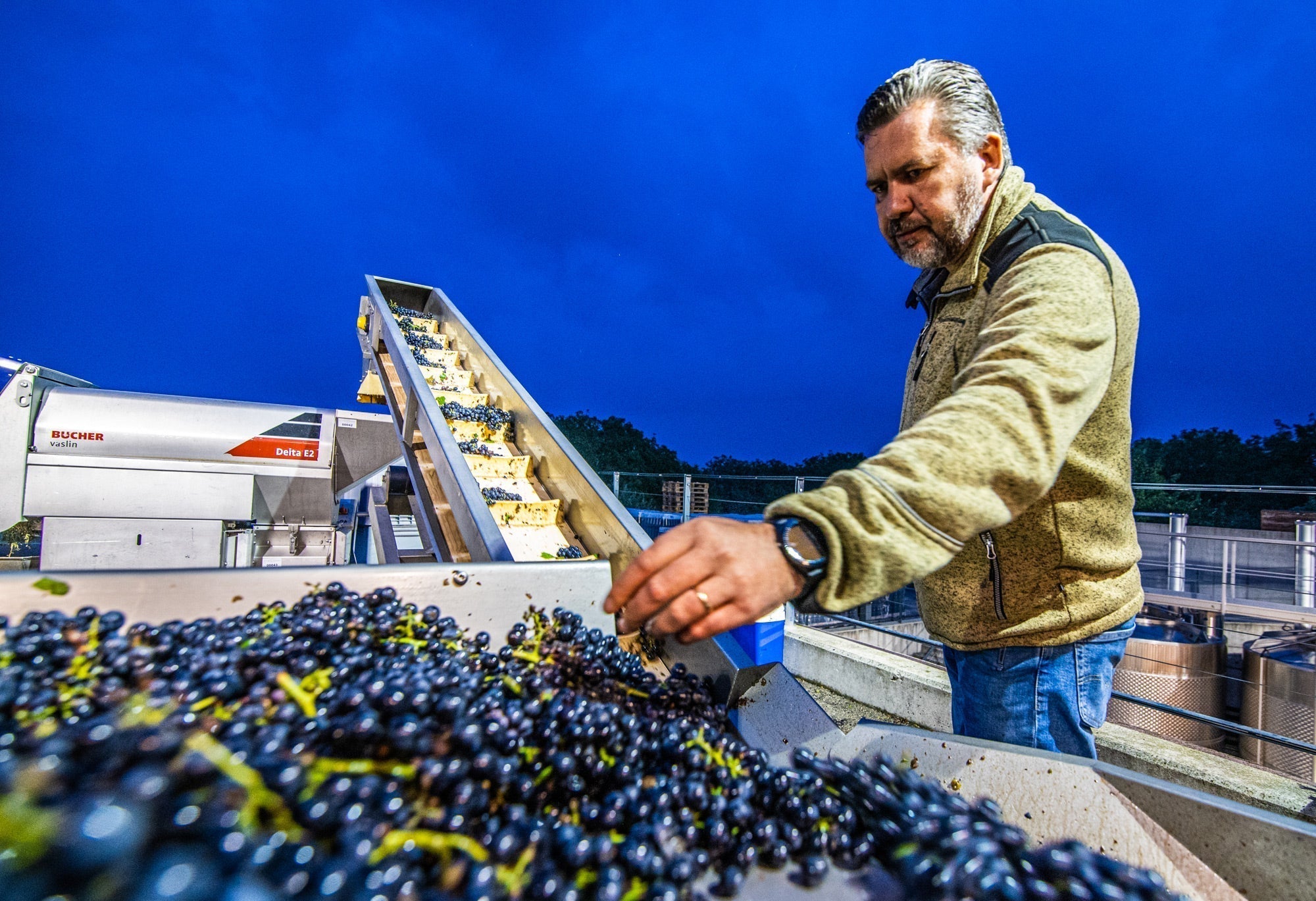
– The manual part, so I try to work as much as possible with the grapes and the wine because that energizes me. I’m interested in winemaking itself; it’s a complex thing. Sure, some things repeat cyclically here, but there’s never two identical years, and from that, you have to produce consistent quality. That motivates me, along with many friends who are in the same boat and see problems from different perspectives. We talk daily, coordinate, and of course not only about professional matters, even though we graduated twenty years ago. That’s a big deal.
– Do you have a favorite grape variety?
– I usually ask back. If you have two children, which one do you love more? Each is different; you love something for one reason, something else for another, sometimes you get angry because it rots, sometimes you love it because there’s no problem. You have to love the grape itself, although there can be huge differences between varieties, it’s just as joyful to harvest Királyleányka as Pinot Noir. If you look at value, you can obviously rank them, but in my eyes, as living beings and plants, they are equally valuable.
– When you joined the Kúria in 2009, you already clearly envisioned creating a modern winery. What important professional milestones do you have behind you?
– First, we rethought the product range, then introduced a new design. Then followed several years of joint thinking and workshop work involving Bord Építész Studio, resulting in working since 2013 in a 1100 m2 building suitable for processing 3500 hectoliters. Since 2009, we have increased our vineyards from 15 hectares to more than 50 hectares. Besides the Etyek wine region, we now also produce in the Balfi vineyards near Sopron. In 2016, the Mérész Sándor Project started, which aims to try out interesting grape varieties to see how they perform alone, testing this with the help of wine-loving audiences.
We have been holding vertical Pinot Noir tastings for ten years; in 2018, the Pinot Noir vintage selection appeared, consisting of six Pinot Noirs from five vintages. Another tradition is the June ChardonnÉJ, where we celebrate the Chardonnay variety together with Hungarian and foreign winemakers. With Pláne Frizzante White, we stepped into the sparkling wine market, and since then, we have introduced rosé as well. Even the first brandy is already in the bottle. In December 2019, we introduced a novelty: our first sparkling wine, the Sparkling Sauvignon Blanc.
– What are the further plans at the Kúria?
– Last year, three more Mérész Sándor Project wines were born. The first was an orange wine based on Szürkebarát, then the Wild Fermented Sauvignon Blanc, and then a natural Királyleányka. This year’s big challenge will be sparkling wine made with traditional methods; we bottled it last year and want to age it in the cellar for at least 18 months.
We are currently undergoing organizational development; transitioning from a small size brings diverse experiences. We hired a viticulture colleague who relieves me in the vineyard. Managing the winery, viticultural work, and administration in one hand is no longer ideal with 50 hectares.

New plantings are also expected; this is teamwork, no one can say what will happen in 15 years or how the noticeable climate change will affect the vineyards. We try to prepare for this; we are currently examining how to solve vineyard irrigation. We pay attention to improving soil fertility and water balance, so sowing between rows has been our practice for years, but there is still much to learn in this area. The long-term goal is for the vines to feel excellent. We want the vineyards to be in good condition because the basis of high-quality wines is old vines. This is supported, for example, by paying attention to the vines from pruning to the end of the growing season.
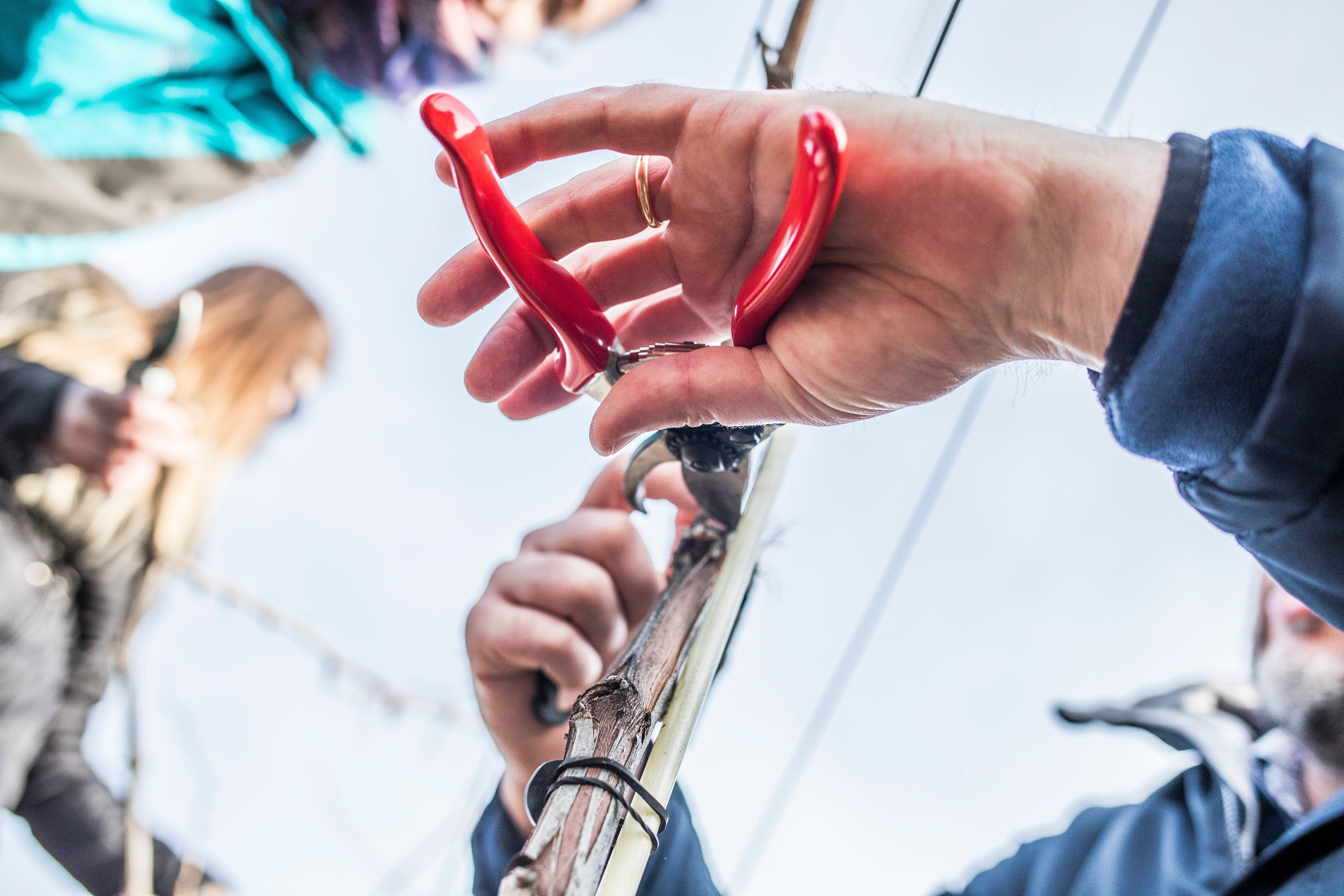
There is a lot of talk lately about biodiversity and sustainable farming, which was less in focus in past decades. We also try to cultivate our areas with this approach. It may not be economically profitable in the short term, but in the vineyard and wine, you must think long term. Vines can live for 100-150 years; old vineyards don’t give record quantities but quality. The goal is to bring our old vineyards into better condition and to plant new ones for such a long term from the start. This requires trained people. That’s why we taught them pruning again with new foundations, and this must be seen as a long-term investment. If you consider that this extends the vineyard’s lifespan, it’s worth it. These are not immediately measurable results, but you have to believe in it, and then it will happen.
– What long-term personal plans do you have?
– I’d like to think I plan, but plans are there to be changed. I have more dreams, and those usually come true.
– For example?
– Well, that we are sitting here, that’s a dream too! They laugh.
– What do you plan for your retirement?
– I’d like to hunt in the vineyard. Not necessarily on my own land because I want to rest too. I don’t want to grow old quickly; I won’t be a classic retiree, I’ll figure something out by then. We recently bought a house in Budakeszi, which turned out to have a particularly beautiful, large old natural stone cellar underneath. The street appears on the first 1760 survey map; it was probably a Swabian press house, so there will be work there too, but I still have at least forty years until retirement!
Author: Erika Schneider