As recognition for his professional work, Sándor has been among the TOP 50 nominees for the "Winemakers' Winemaker" professional award every year since 2013.
It’s been a long time, hard to summarize, and we don’t even try. Instead, we highlight a few thoughts from the many interviews with Sándor that outline the professional journey of our “golden pruning shears winemaking phenomenon” and his shared world with Etyeki Kúria.
“Already during the last summer break before college, we decided that we would become ornamental horticulturists. In our minds appeared the baron’s ornamental garden’s white-gloved gardener, transplanting geraniums. By the time we got to Gyöngyös, it turned out there was no ornamental horticulture program, so I became a general gardener. You could specialize with your thesis topic, choosing between vegetables, fruits, and grapes. The head of the vegetable department was a strange character, so I stayed with fruits and grapes. Lajos Szőke was appointed head of the viticulture department then, and he played a role in us ending up there.”

“If I weren’t a winemaker, what would I like to do? Honestly? I can’t imagine it. I am as much in my place as a person can be. I am grateful to life that it turned out this way!”
“I like the manual part of my work the most, so I try to work as much as possible with the grapes and the wine because that energizes me. I am interested in winemaking itself; it’s a complex process. Although some things repeat cyclically here, there is never a year exactly the same, and from that, you have to produce consistent quality. That motivates me, along with many friends who are in the same boat and see problems from different perspectives. We talk daily, coordinate, and of course, not only about professional matters. That’s a big deal.”
“Favorite grape variety? I usually ask back. If you have two children, which one do you love more? Each is different; you love some things about one, some about the other, sometimes you get mad because it rots, sometimes you love it because it’s fine. You have to love the grape itself, although there can be huge differences between varieties, it’s just as joyful to harvest Királyleányka as Pinot Noir. If you look at value, you can obviously rank them, but in my eyes, as living beings and plants, they are equally valuable.”
“I don’t like titles; I don’t think it’s important whether someone is a head winemaker or just a winemaker. At the Kúria, I manage the entire production, so I oversee every process from the vineyard to the wine, up to bottling. From the areas to the selection of varieties, barrels, and aging methods, everything is my responsibility. I’m in a fortunate position because we have a great team; colleagues know their jobs both in the fields and in the cellar.”
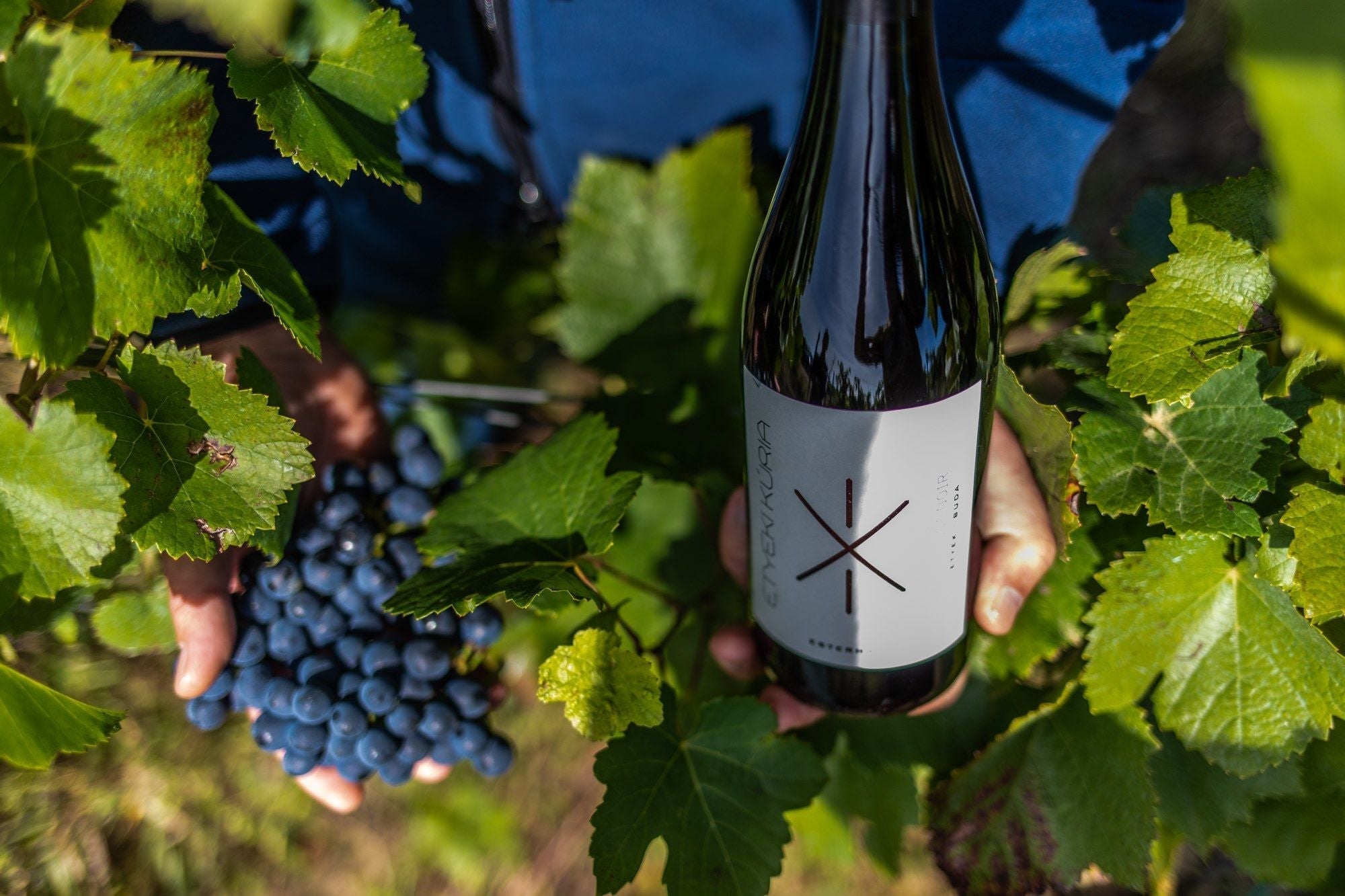
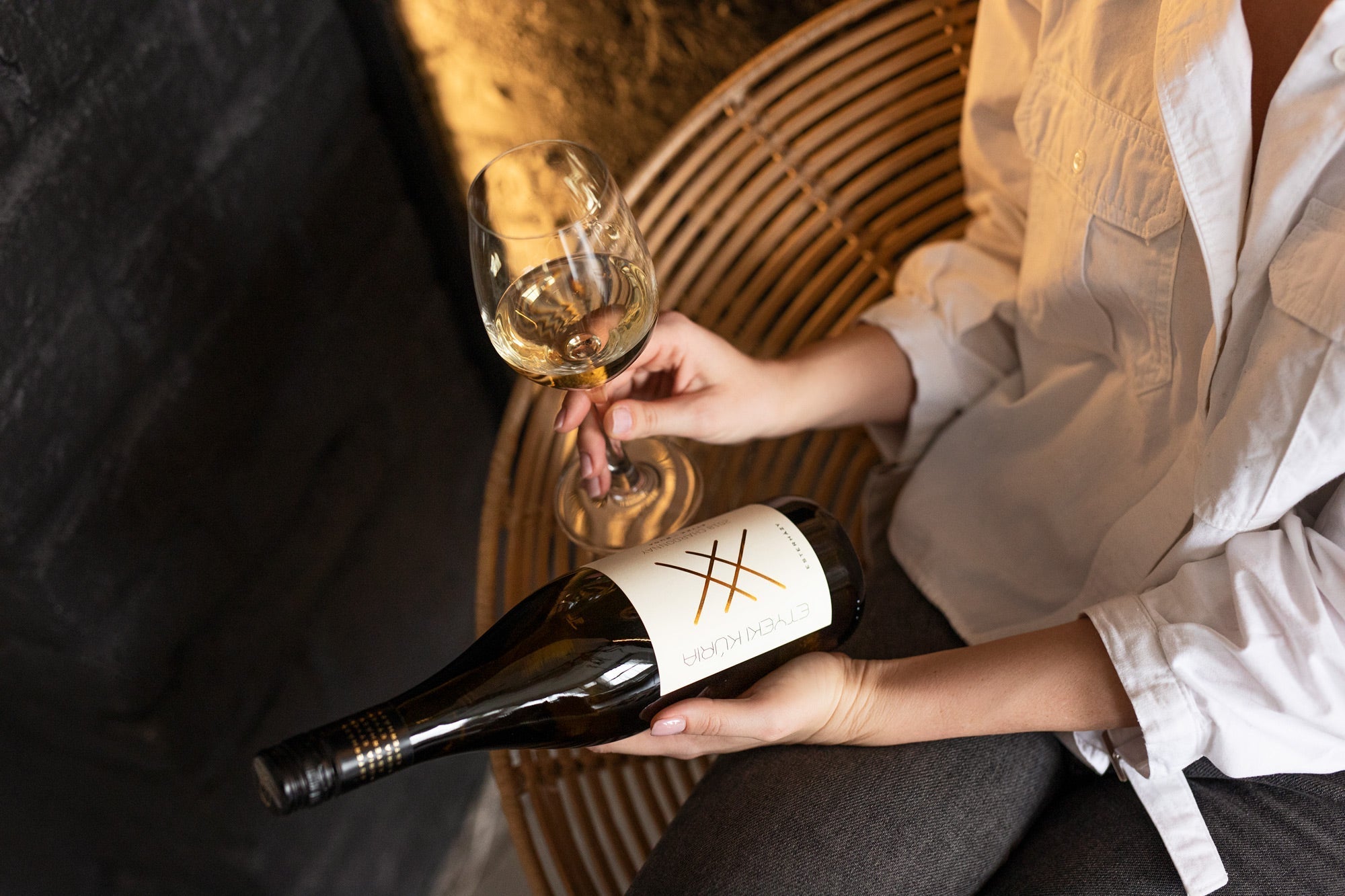
“We have a total of 50 hectares of vineyards, but in two wine regions, Etyek and Sopron. In Etyek, we mainly work with white varieties, mostly Chardonnay, Sauvignon Blanc, and also Pinot Noir, while in Sopron, red grapes dominate, especially Kékfrankos and Merlot. For us, high quality is the top priority; the goal is to make the most beautiful and best wines possible. For reds, we focus on long aging potential and elegance; for Sauvignon Blanc, we also strive for elegance; and for Chardonnay, we want to achieve fresh, fruity aromatics alongside beautiful, aged notes.”
“One fundamental truth in the world of wines is that good wine can only be made from good grapes. In viticultural work, we follow an ‘integrated’ approach. The essence is that, thanks to past experiences and modern technologies, we make decisions based on up-to-date data and try to spend as much time as possible out in the field among the vines.”

“We have already held thirteen Pinot Noir vertical tastings. In 2018, the Pinot Noir vintage selection was released, consisting of six Pinot Noirs from five vintages. Another tradition is the June ChardonnÉJ, where we celebrate the Chardonnay variety together with Hungarian and foreign winemakers. With Pláne Frizzante White, we stepped into the sparkling wine market. In 2019, our first sparkling wine, the Sparkling Sauvignon Blanc, was made.”
“In today’s world, everything changes very quickly; market players and new generations are joining the family of wine consumers. My opinion is that winemaking is an area where you can never say you have all the knowledge, which means continuous learning. The deeper I dig into the knowledge, the more I see and experience that I can never sit back; the journey is far from over. Acquiring new and ever newer knowledge is a constant task; that’s what drives me and offers something new and interesting every day.”
“The MSP (Mérész Sándor Project) is both a serious professional challenge and a very interesting game. Originally, we started it to test some grape varieties and use the experiences at Etyeki Kúria. Now we focus more on trying out methods unknown to us so far, stepping a bit out of our comfort zone.”
“There’s a lot of talk lately about biodiversity and sustainable farming. We also try to cultivate our areas with this mindset. It may not be economically profitable in the short term, but in vineyards and wine, you must think long term. Vines can live for 100-150 years; old plantations don’t yield record quantities but produce quality. The goal is to bring our old plantations into better condition and to plant new ones with this long-term perspective from the start.”
“We pay attention to improving soil fertility and water management. That’s why inter-row sowing has been a practice with us for years, but there is still much to learn in this area. The long-term goal is for the vines to feel excellent. We want the plantations to be in good condition because old vines are a prerequisite for high-quality wines. This is supported, for example, by careful attention to the vines from pruning through the end of the growing season.”
“Under all circumstances, you have to get the best out of your conditions, and this can only be achieved one way: with honest, persistent, and dedicated work.”
“The team is great. It’s a pleasure to work here every day!”
“If I were to catch the golden fish, I would wish for the strength to enhance the good reputation of the Etyek–Buda and Sopron wine regions through our work. Our team is young, strong, driven by momentum, and it would be great if it stays that way. Both regions are very important to us, and if we achieve this goal, that’s enough for me.”